A random act of kindness

There are two types of people in the world.
OR
With all the authority vested in me by this act of you reading this with possibly questionable level of attention and my sheer audacity of assuming such disputable dominance, I declare that there are two types of people in the world. The first category is of those people who out of an unknown mixture of innate empathy, biological rewards, learned behaviors, good upbringing, guilt by association, pointless benevolence, (or sometimes even condescension) indulge in random acts of kindness towards others The second is of everyone else. Equally interesting, as they are, to our charitably hypercritical minds, I request that today, we ignore this second lot, as they (it would appear) would ignore opportunities of being kind to others.
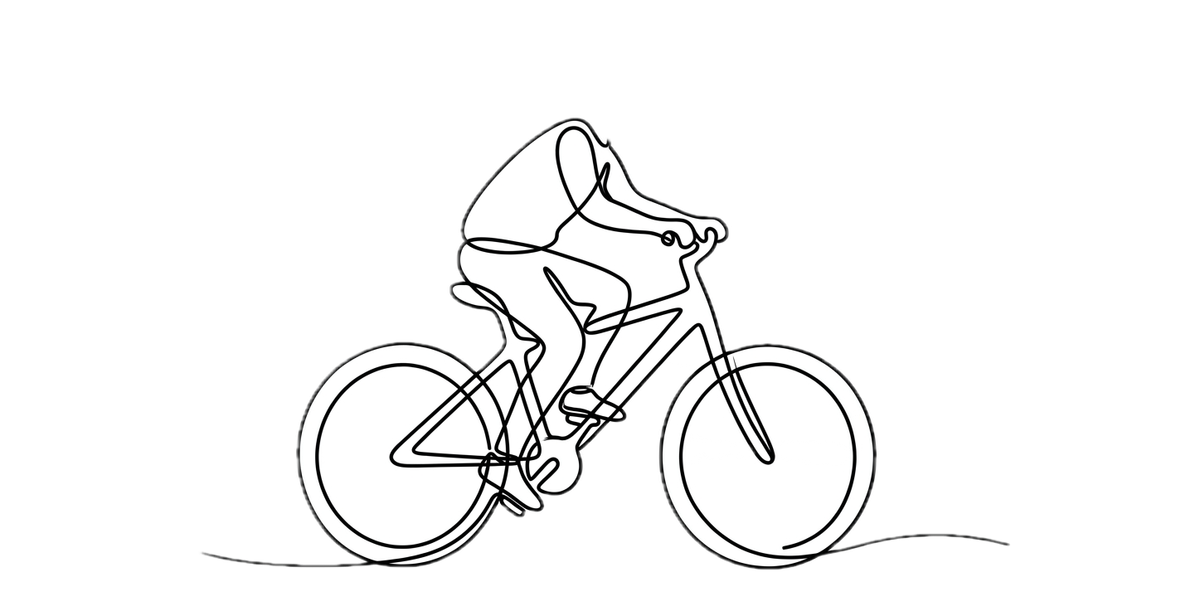
The very first act of random act of kindness that yours truly was subjected to at least as far back as his memory is faithful to him was that of him trying to learn to ride a bicycle. To the uninitiated, it would be very difficult to empathize with the sheer difficulty of taking upon this task for the subject. So let’s dive into this first.
The story must start with the subject stealing the bicycle from his own house. I could have used a less loaded word like sneaking or borrowing or liberating even, but believe me on this, we are talking about stealing here. The bicycle, the actual owner of which was away from its storage place below the legendary staircases with a history of inflicting head injuries to kids, was stolen with great determination and care with the help of two cousins. These two little girls were as thrilled about the idea of seeing the subject ride a bicycle as the subject himself was about riding one.
Now, you have to understand certain things about yours truly here. All of these correspond to this impulsive gentleman who has spent more than what he would care for on setting up a blog for which an attempt to finding readers in the age of reels can be severely detrimental to sanity. First thing of all, as insinuated earlier, he is impulsive- has always been- to the degree that he can make huge life decisions out of sheer itch- sometimes they work, other times, he learns the side effects of being impulsive. The second thing, perhaps more important, this character is bad at estimation. And I mean any kind of estimation. You ask him how much he wants to eat and he might answer in numbers of camels; you might ask him how fast he can run and he might give you an answer that questions the way biology is supposed to work; you ask him how hot it is outside and he might say oh it doesn’t matter, I am from eastern India you know (as if people are birthed on furnaces back home). And this last genre of estimation is what you’ll see him demonstrating. If there is one more thing good to know beforehand, it is that extreme unwarranted anxiety is one of his major character traits.
So, enough about the thief and more about the bicycle now. The bicycle finds itself stolen by a kid some 10-11 years old with two of his accomplices shutting and muffling the creaky iron door behind with smoothness and care. I have to assume that it would have been uncomfortable to step out from clean concrete shade and cool soil bed to 45 degrees celsius of dry scorching heat at 1 o’clock afternoon (the timing being essential because that’s when the adults of the perpetrators family go for a ritual afternoon nap). After several failed attempts riding, a plan is devised where the accomplices hold the bike steady for long enough. It starts running. The bicycle can feel the sheer joy of its rider in figuring out the complex mechanics of pushing one foot after another on rotating paddles. Hot Lu starts whistling as the bicycle makes way from the soil pavement to the stone-ladden-half-completed sadak (Indian word for anything that resembles in its duties to a road, but is severely limited in its actual capabilities to be called one). Even the hot lu cannot distract them from the fact that they have now unknowingly become part of a thousands of years old legacy of rotating round things for velocity.
We must momentarily also talk about this sadak character. It came into existence, or let’s say metamorphosis from its earlier pagdandi phase by virtue of a government order. It was to make sure that there was a better way of commute for the villagers who were periodically hit by floods. For this noble cause, the first thing that was done was that soil was dug out from the sides of this proposed route and put on the route. The second was to make a bed of sturdy, irregularly shaped stones of about 4-5 inches in diameter. The third step would have been to perhaps put charcoal or some other binding material on this very uncomfortable layer of pointed stones, but unfortunately, because of the constraints of time, budget and the sins of the past lives of these villagers, the project had to be halted permanently after the second step. All that could be mustered under the limitations was a big inscription stone etching into eternity the names of the people without whose visionary leadership the project couldn’t even have been started, let alone making it to the second phase already. Continuing on the subject of sins of past lives, it rained heavily soon afterwards and the soil and the stones got irregularly washed away into the ditches created by the digging for making the very thoroughfare. As it works with ecology and anthropology, the ditches evolved into a lush farm of different species of cacti and weed and occasional dump-yard for animal carcasses.
Around this village, there are several others- primarily divided by caste. They don’t go well together. There is a general sense of otherness in the air on every side. Not to say that there is disparity in the financial wellbeing of people in these different villages, but overall the region is poor. But as most other things in the universe, it is ironic that these people who might have a chance loving and caring for each other, are often not-at-good-terms with each other. Perhaps that is the way human beings have always been- at not-good-terms. Fights often break between young kids and escalate to the levels of families on small matters- perceived insults, damage to livestock, ancestral estrangements et cetera Not often does these escalate to physical fights unless one party is visibly at advantage, but sometimes it does. And when it does, it is a matter of who gets the most of it in the first round, because often, people are more organized by the time of the second round. I just want you to appreciate that something as innocent as calling someone by his father’s name (with a fucker suffix), throwing a chappal in the general direction of someone’s forehead, pooping one someone’s cricket pitch, or, hitting someone with a running bike on one of these spiky roads might be interpreted as an act of war and properly responded then-and-there.
Our main character and his loot are running at a glorious speed on the monument of government’s efficiency while an uncaring hot wind is blowing past anything and everything. And in true Anton Chekov fashion, the gun is fired, the bicycle meets its irrevocable fate and makes its way into the graveyard of dead and alive cacti. Multiple punctures take place in the rider. The ride, by the mercy of irony, is totally safe in all the important places. As was foreshadowed in the introduction about the lead, impulse takes charge, a certain orifice in his behind tightens, all the early traces of testosterone are called upon and the bicycle is dragged back to the road. Attempts are made to get the steed running again; some pass, some fail; needless to mention that the cacti are kissed several times during this whole odyssey.
Three people of varying heights are walking on the road with gamchha on their heads to avoid the heat. People who think mirages are a desert phenomenon, should have been there to witness this epic scene which could easily be mistaken for David Lean’s masterful cinematography that captured a mirage on a real camera, not this digital post-fix garbage. There are three people as I said earlier- varying heights as I said earlier. One of these people is about 2 and a half feet and the other two are not interesting for the day- as I said earlier. The bicycle rider can see them from afar. It can’t be said if it is the wind or the heat or the tiredness, but he cannot figure out if the three people are coming towards him or going away. He is thinking. If they were going away, that would mean they walked past him and faster than him; and as he has read in an essay about bicycles, bicycles are faster than pedestrians; they must therefore be moving towards him, but he cannot make out how far they are. There are a lot of variables in play. You start evaluating one and another skips. He knows a lot of things. He knows that the bell can be used to let people know that he won’t leave the way. He knows that it can be fatal to hit someone with a bike. He knows that these people are least likely from his village. He knows that hitting a person from another village might mean a good amount of involuntary percussion massage. He knows that the handbrakes must not be applied on full speed or the bicycle flies away. All he needs to know now is when to slow down and how to avoid hitting these people in the best hopes for survival. While in the mind is busy in the act of deduction, feet get no instruction to act one way or the other, hands do that thing that they do when you are a novice boxer who is being punched in the face repeatedly by a heavyweight champion and the whole act stops between the legs and the chest of the 2 and a half foot man.
The two companions ritualistically hold our boy by collar and hair. They are rejoiced at the idea of finding an outlet for all the accumulated frustration from the scorching heat (which has definitely overstayed its welcome as it is now nearing 4 o’clock). The stage is set for the action scene where the villain is about to be served his comeuppance. But, there is an intervention. The gentlemen I had hit shouted “He is a kid bhenchod. Leave him be!”
This, dear reader, is the first act of random kindness I remember. At the age of 12 in an environment of heat, dust, pointy stones, cacti, inter-village rivalry and idiots on bicycles, I met a man who cared about being nice even when I had hit him with the full force of a bike on his chest. In a great sense of irony, a 2 and half feet man was the tallest man I had met. He worked for a circus- how I know this doesn’t matter. For all I know, he was not educated at all, or rich or had been in a position of power ever at all.
Near the place where a certain lady (lege girl, lege kid) wrote this perhaps at the worst time of her short and troubled life: You can always, always give something, even if it is only kindness! I remember the first hero I met in life for that one random act of kindness.